


FEBRUARY 2025 - PRESENT
Unifying every stage of the home development lifecycle
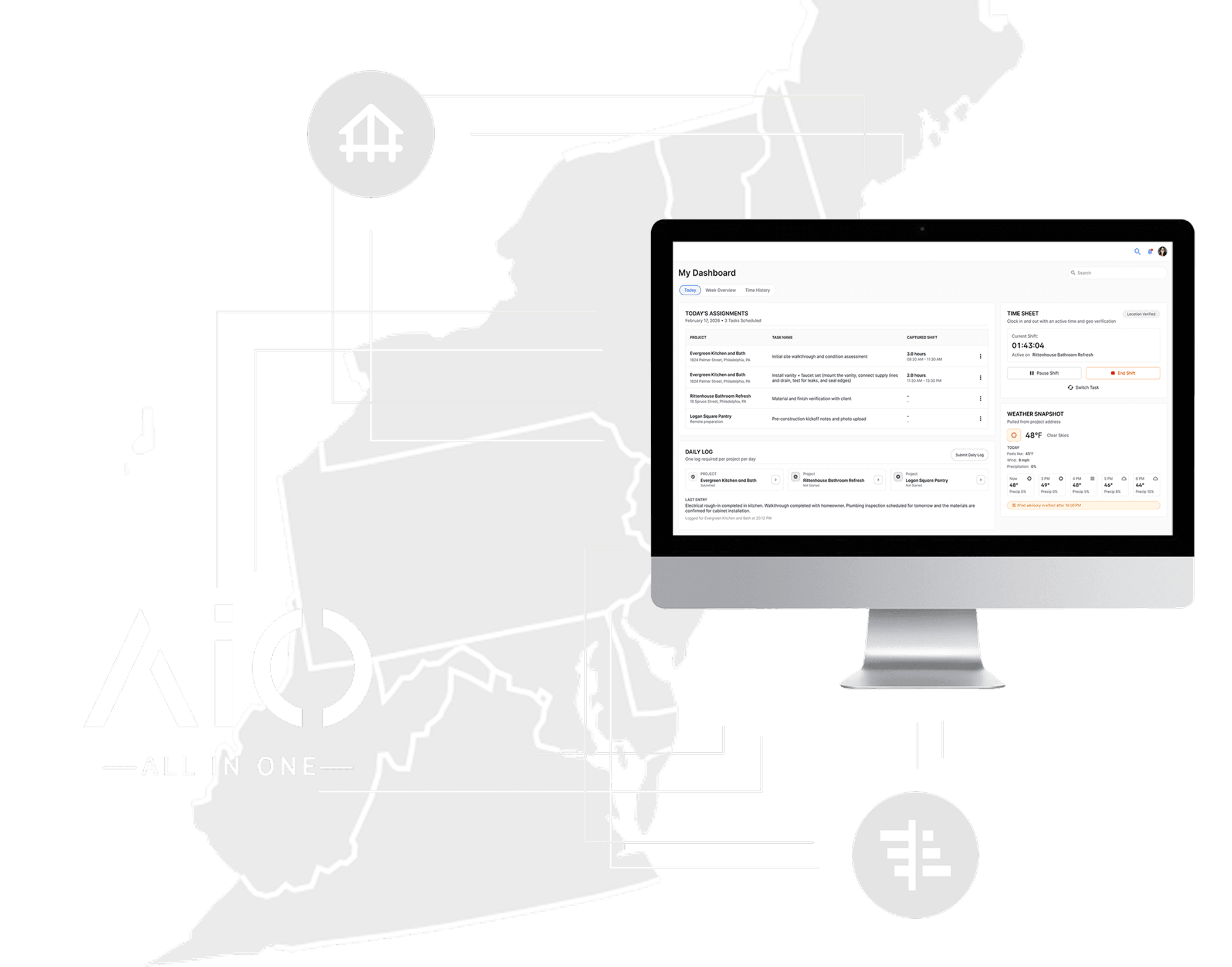
I led design across the platform, defining how data and teams operate within the system.
This project is still ongoing.
The goal was to bring estimating, project management, procurement, scheduling, and financial tracking into one system.
In construction, workflows evolve across roles and timelines, not following a linear path. Most tools out there enforce structure too early, which breaks as projects become more defined.
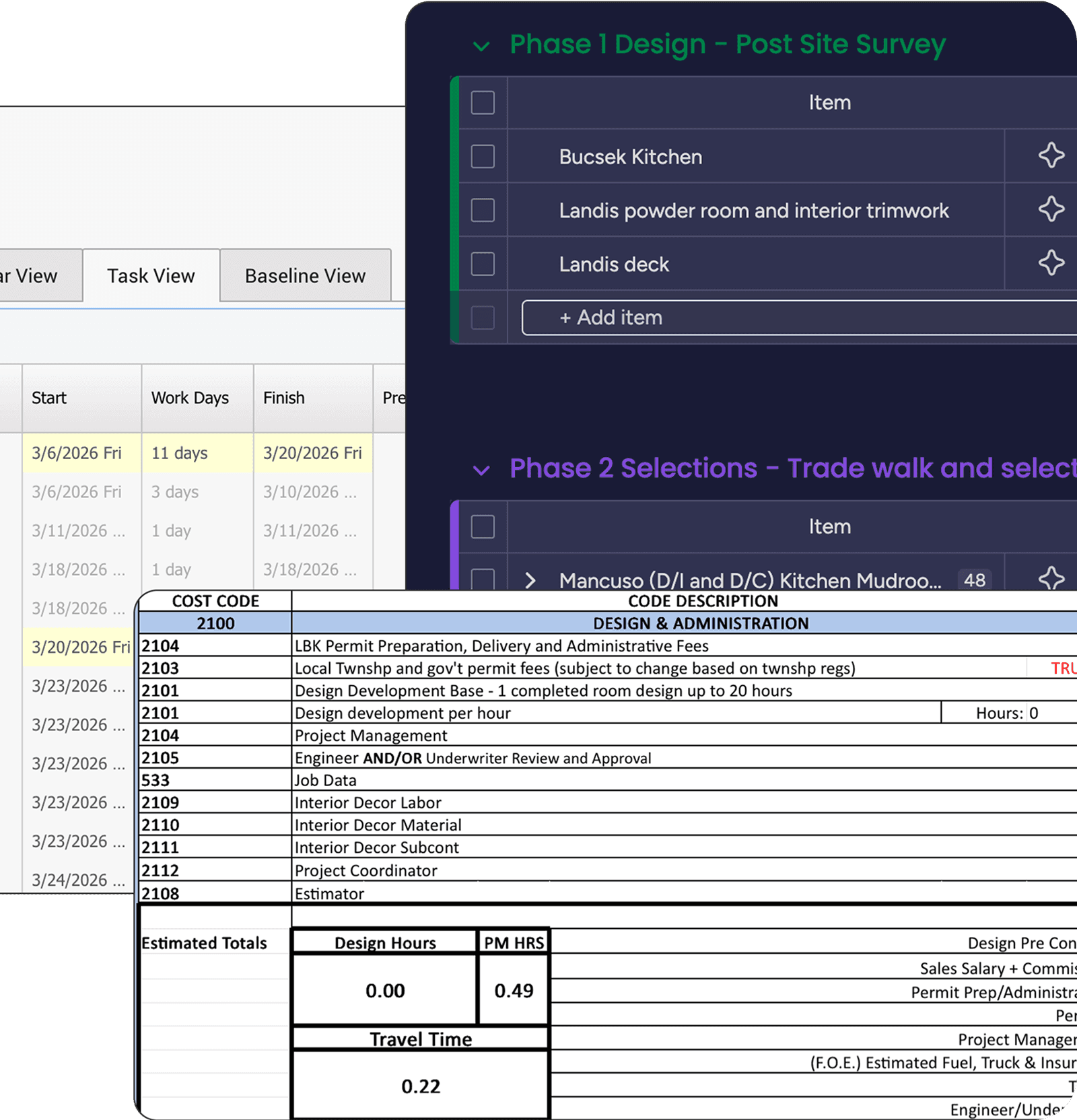
Teams were working across disconnected tools, making even simple tasks slow and error prone.
8+
tools were used a single home development project
4
handoffs were required to move a sold job into execution
Instead of defining workflows upfront, we introduced five core pillars, establishing a foundation while allowing decisions to take shape over time.
SALES
capture demand
Lead intake
Qualification
Deal tracking
PREPARATION
define the work scope
Estimation
Scope definition
Procurement intent
EXECUTION
operationalize the job
Project setup
Scheduling input
Ops ownership
FIELD
execute + track delivery
Technician flows
Time logs
Team coordination
FINANCES
manage cost + changes
Change orders
Finance tracking
Deal Tracking
Friction showed up in three places:
01
Sales Conversion
Qualified work wasn’t consistently turning into active projects.
02
Task Efficiency
Simple tasks took too many steps to complete.
03
Cross-Team Visibility
Information didn’t carry cleanly between teams.
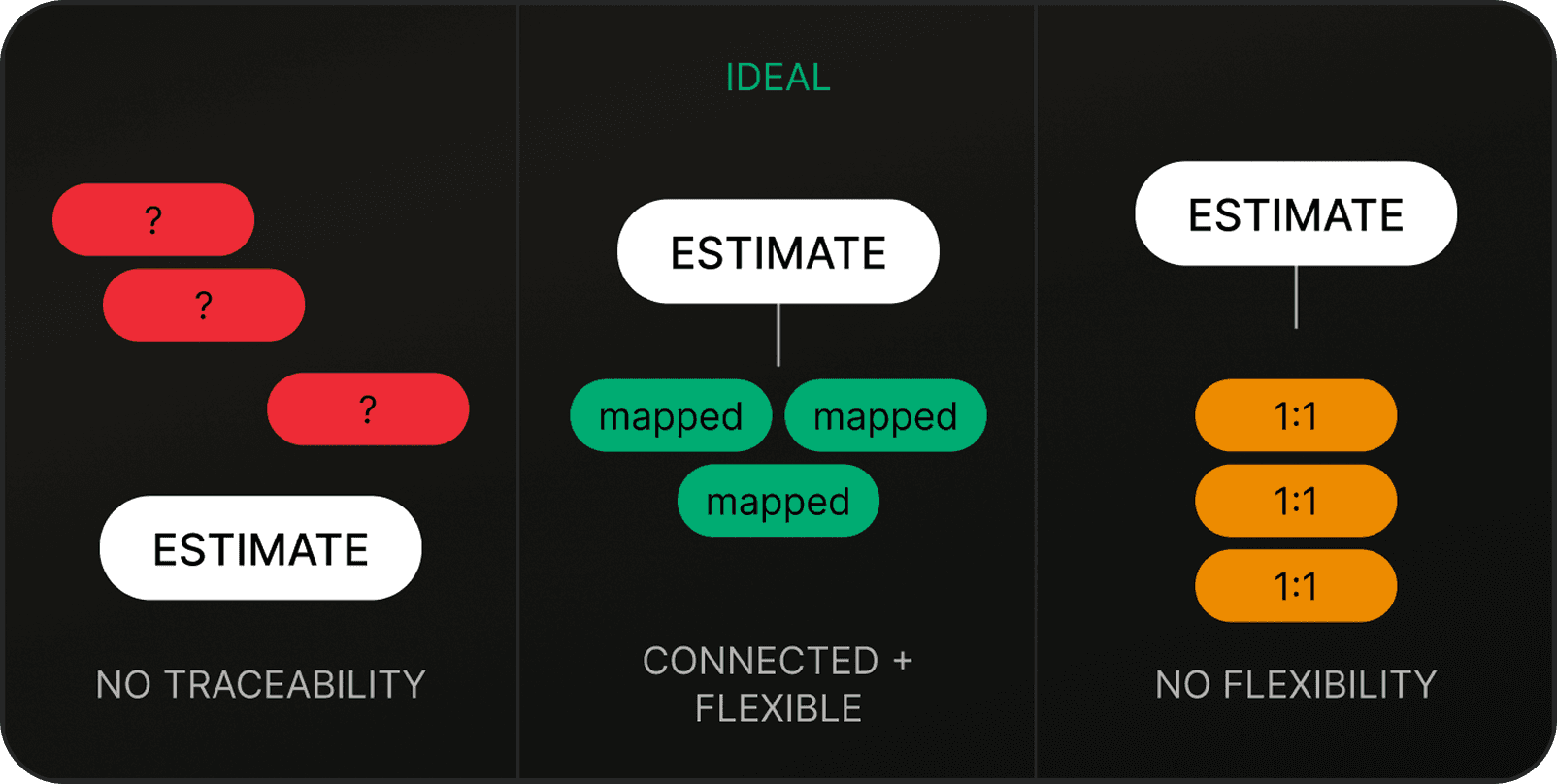
DESIGN CHALLENGE, 1 OF 3
How do you introduce structure without slowing teams down?
Insight: Too much structure slowed teams down. Too little made the system hard to trust.
SOLUTION
We set global rules where consistency mattered, and left the tool flexible for teams to adapt.
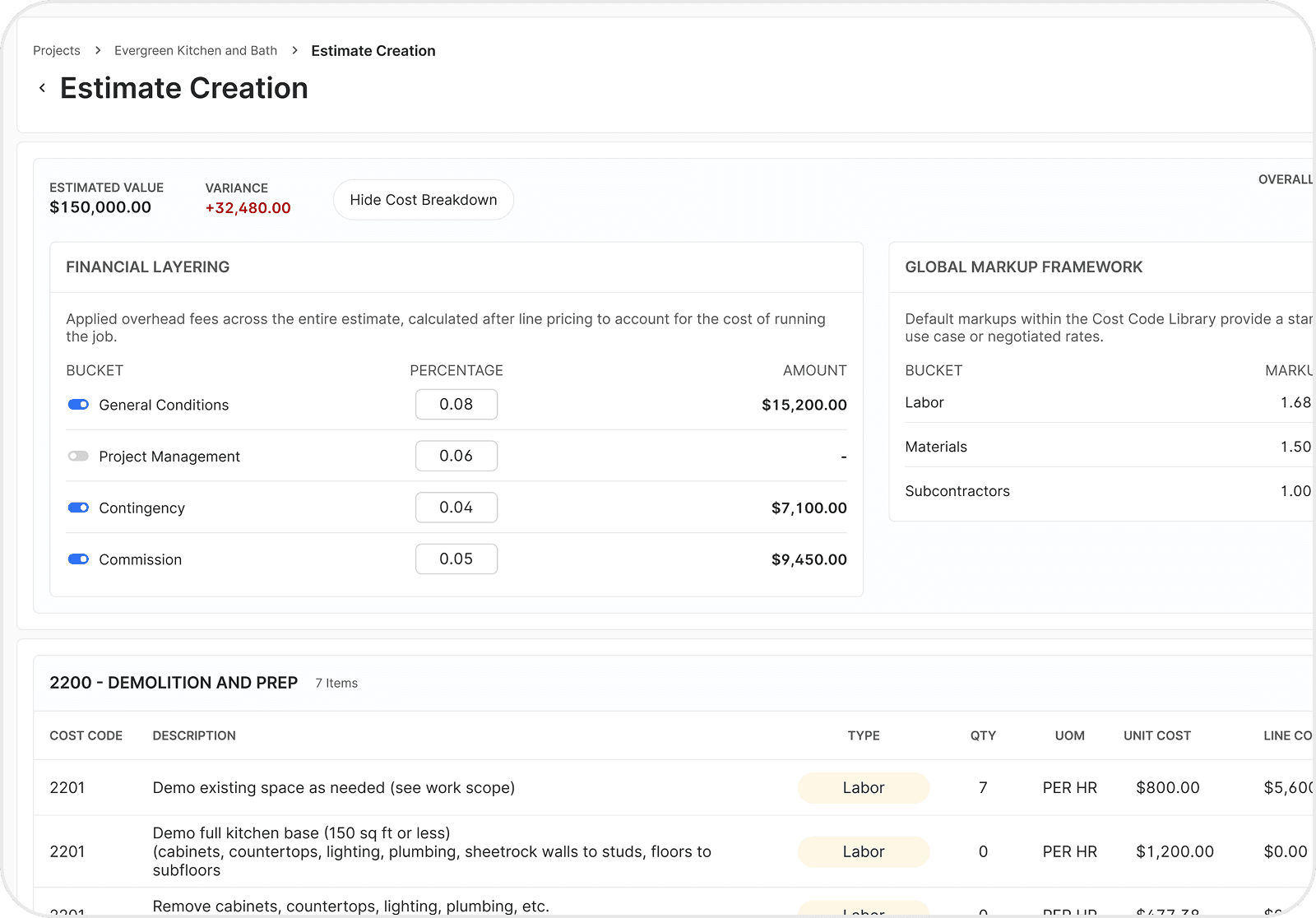
Global financial markups exist in Admin Settings at the system level, versus dynamic adjustments at the project level (shown here)
OPERATIONS PROBLEM, 2 OF 3
As we brought more of the features into one place (jobs, finances, dependencies) the system became harder to navigate.
Key Takeaway: Showing everything at once overwhelmed teams.
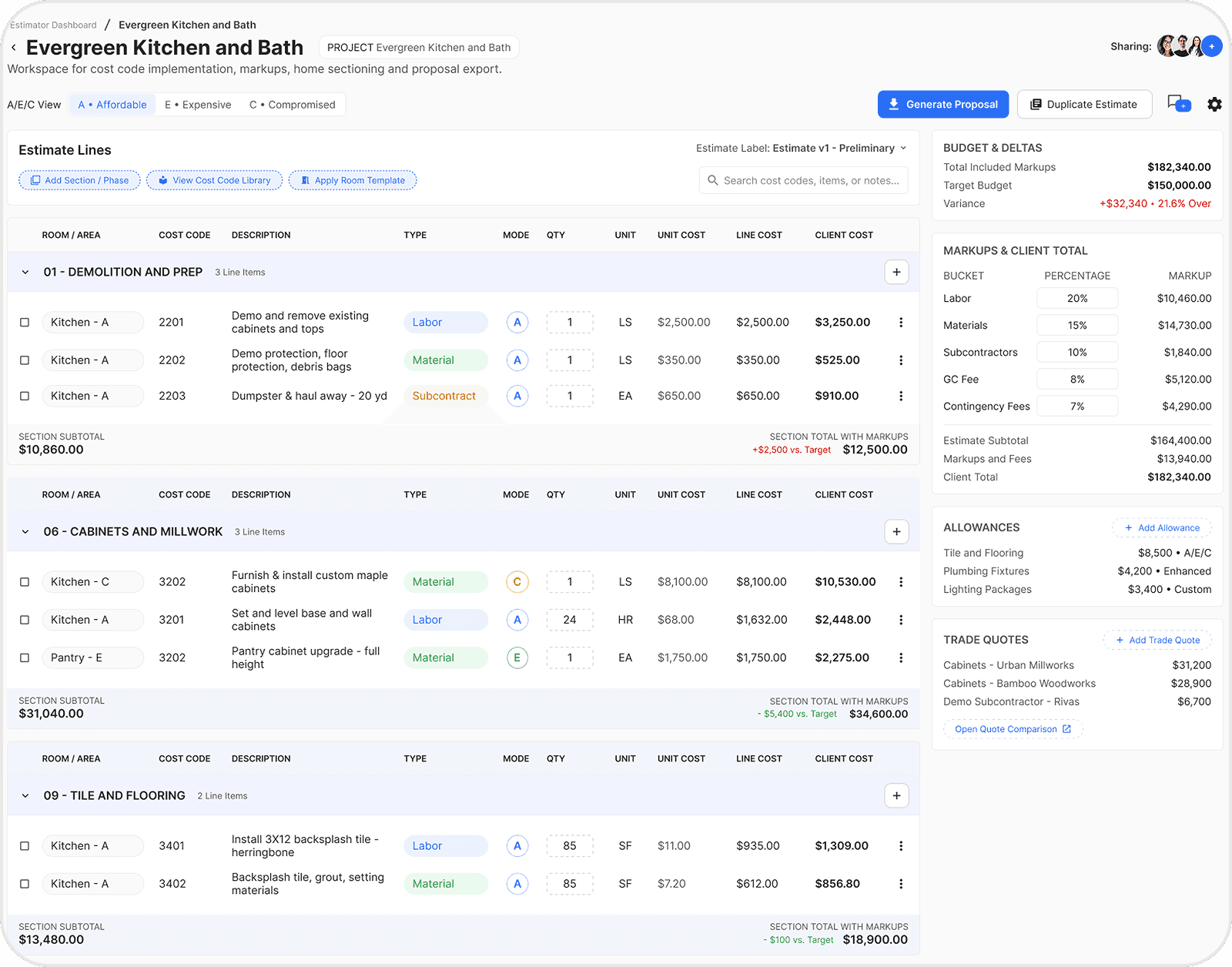
First round of designs (way too busy, eh?)
SOLUTION
Early stages were kept lightweight, introducing more complex features only as projects progressed.
Feature Callout: In sales, information cards focused on quick details. When the project moved forward to later stages, tools like estimating and selections were introduced.
Action cards for Salesperson shown in Sales (Phase I)
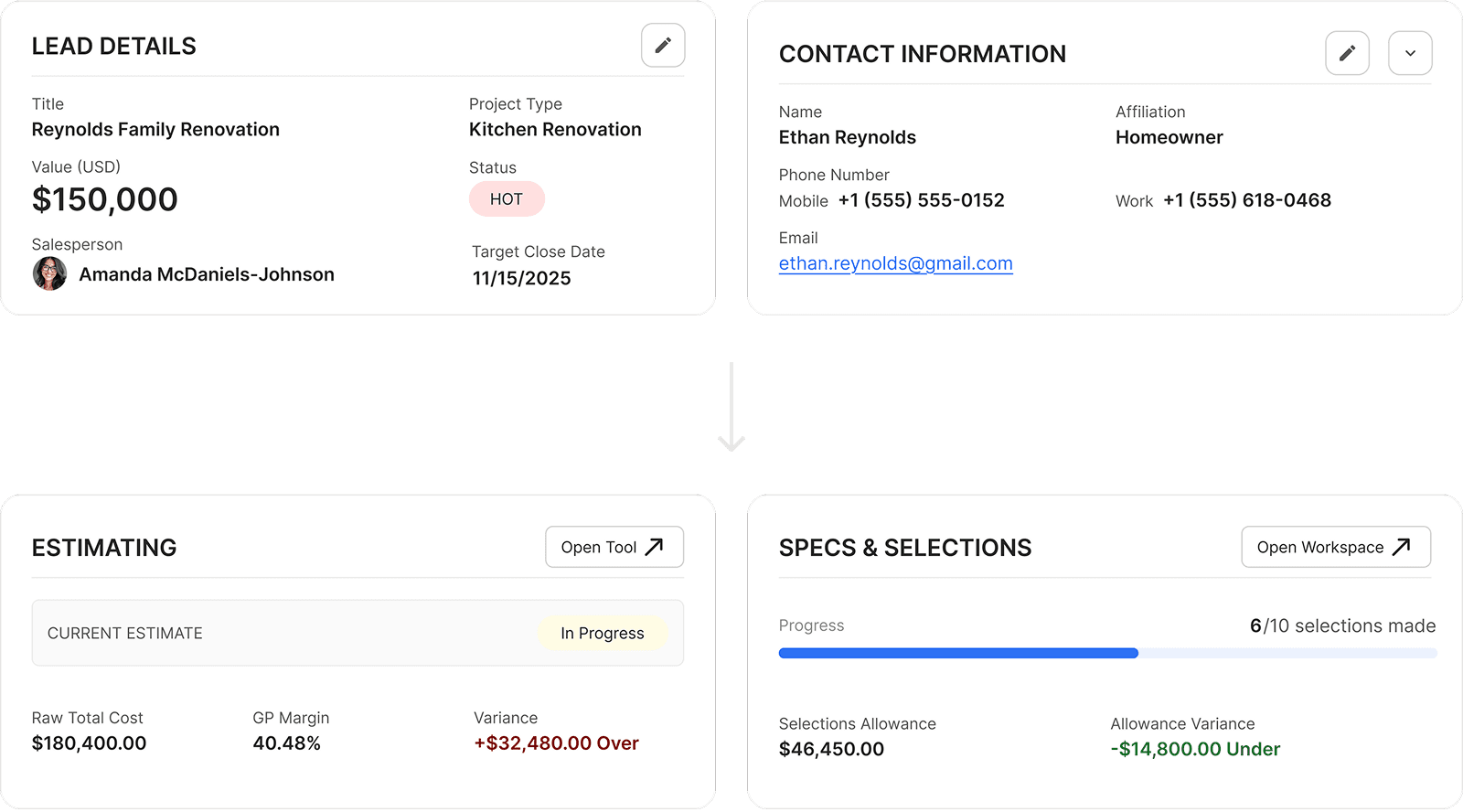
Action cards for Estimator shown in Opportunities
(Phase II)
ASSUMPTION, 3 OF 3
We assumed that keeping all project details and history in one place would reduce manual handoffs.
Insight: That assumption didn’t hold. We introduced clear ownership at each step, with defined approvals and next actions to move work forward.
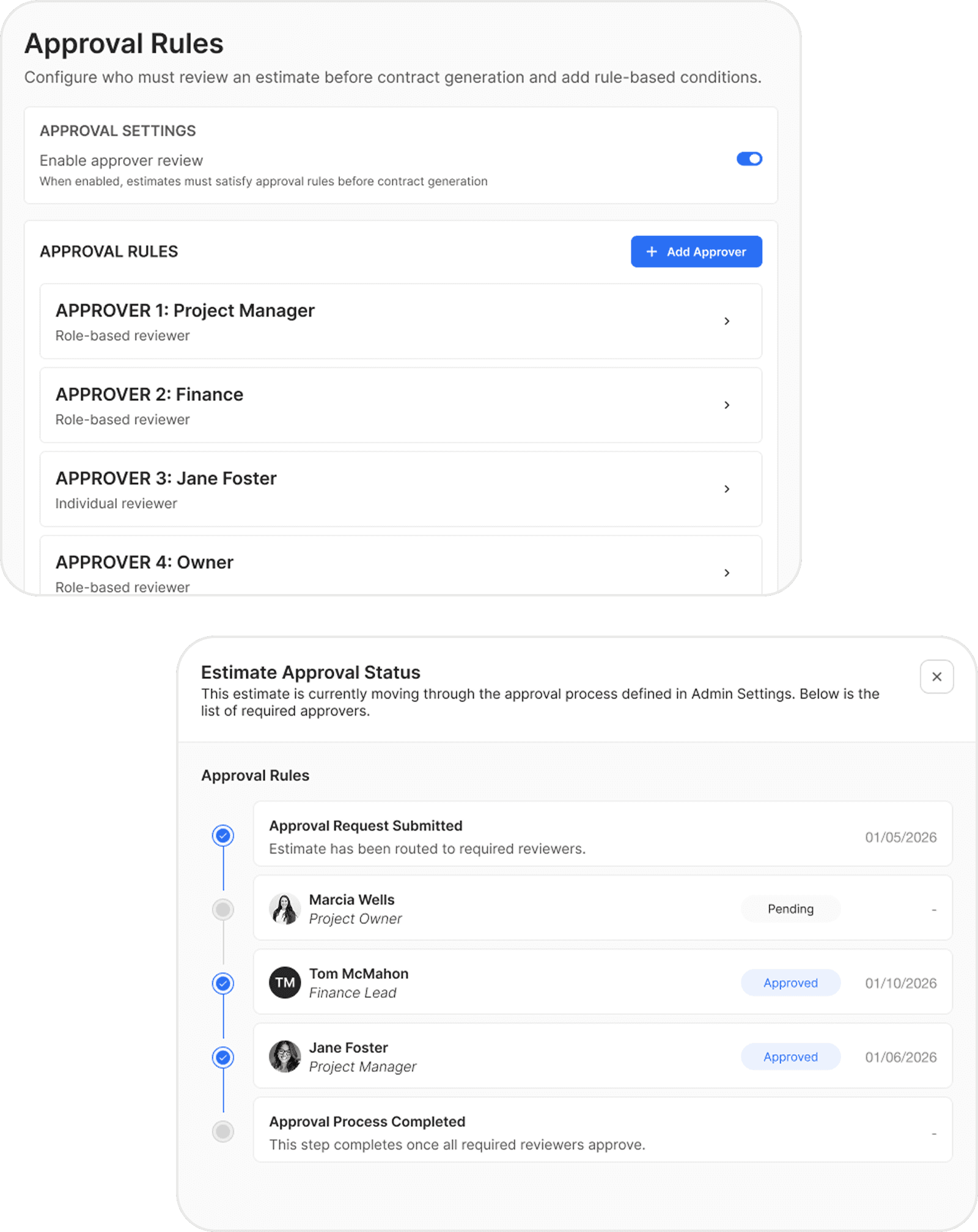
Relevant stakeholders were notified directly when their input was needed
HANDOFF
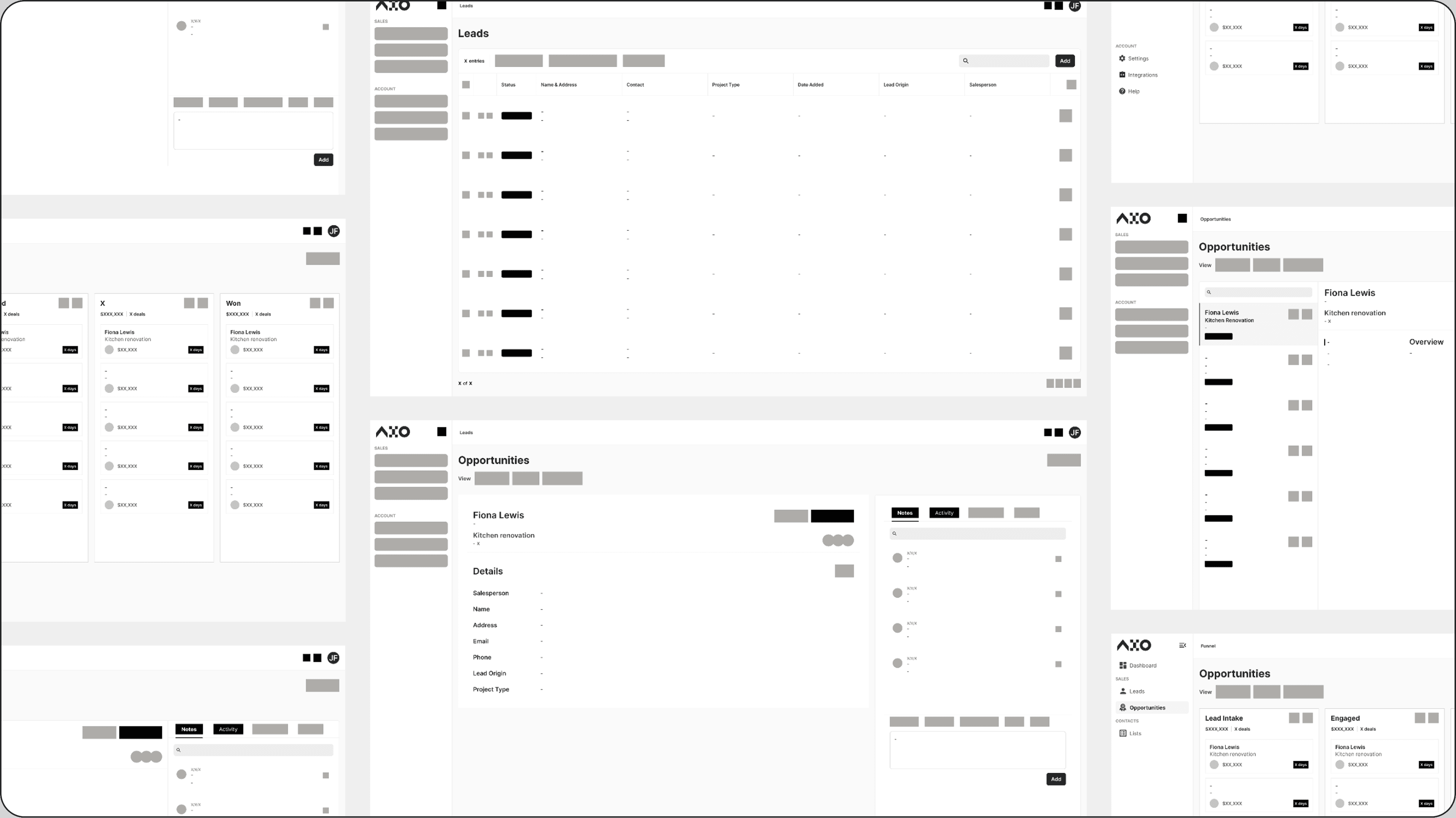
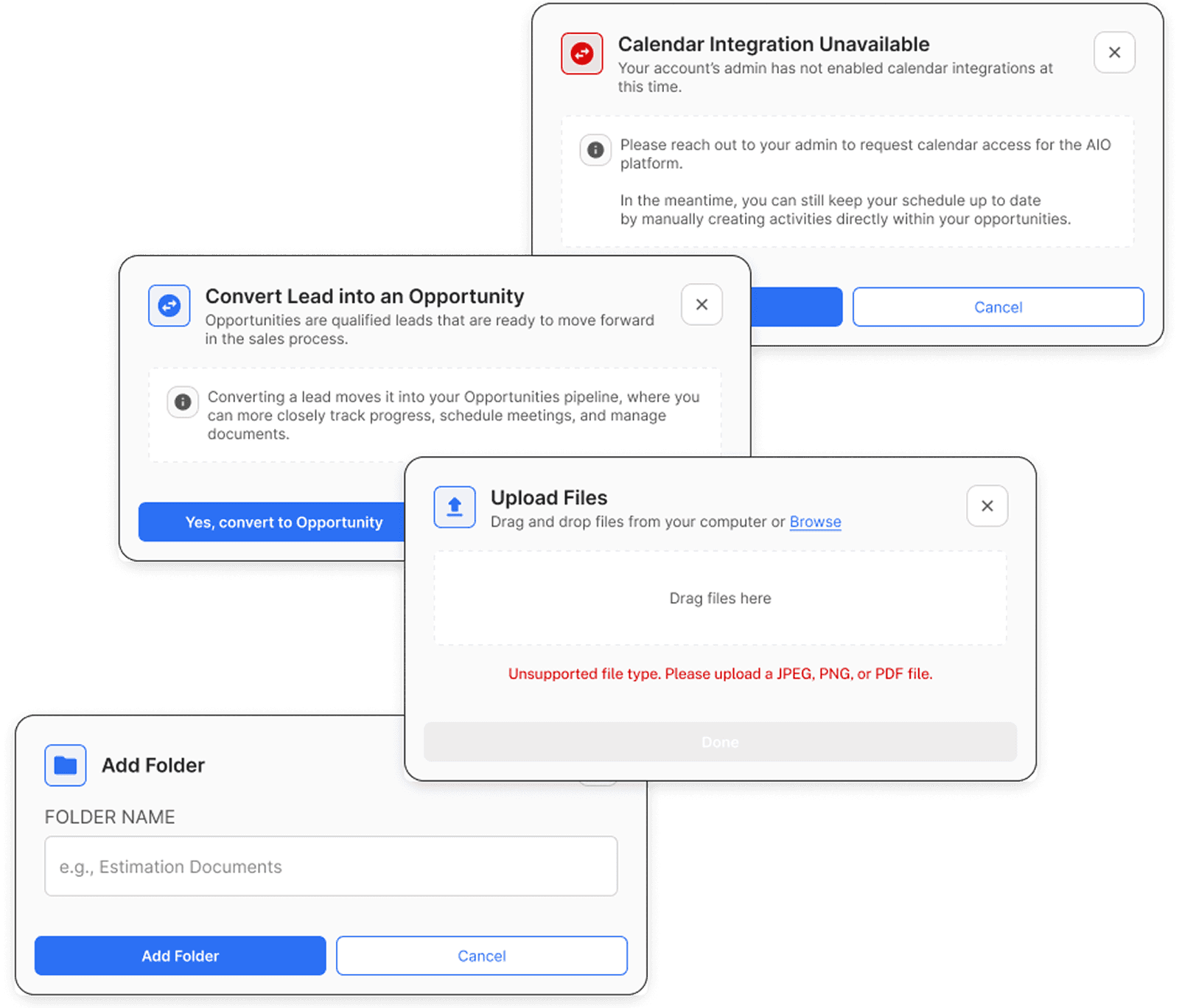
In an extremely large design file, designs only scale when it can be translated into repeatable patterns in code.
As the system took shape, the impact started to show:
01
Earlier visibility into stalled and at-risk work
with surfaced inactivity, missed follow ups, and operational drift visible
02
Stronger continuity across workflows
with decisions and details carrying from one stage to the next
03
A system designed to evolve post-launch
making it easier to navigate and build on over time
04
Foundations for operational intelligence
supporting future automation and insight
Challenges encountered
Designing across interconnected workflows
Balancing governance with flexibility
Making complex processes feel clear in practice
Learnings
Structure only works when teams understand and adopt it
Simplicity comes from intentional constraint
Handoffs only work when ownership and next steps are clear
